
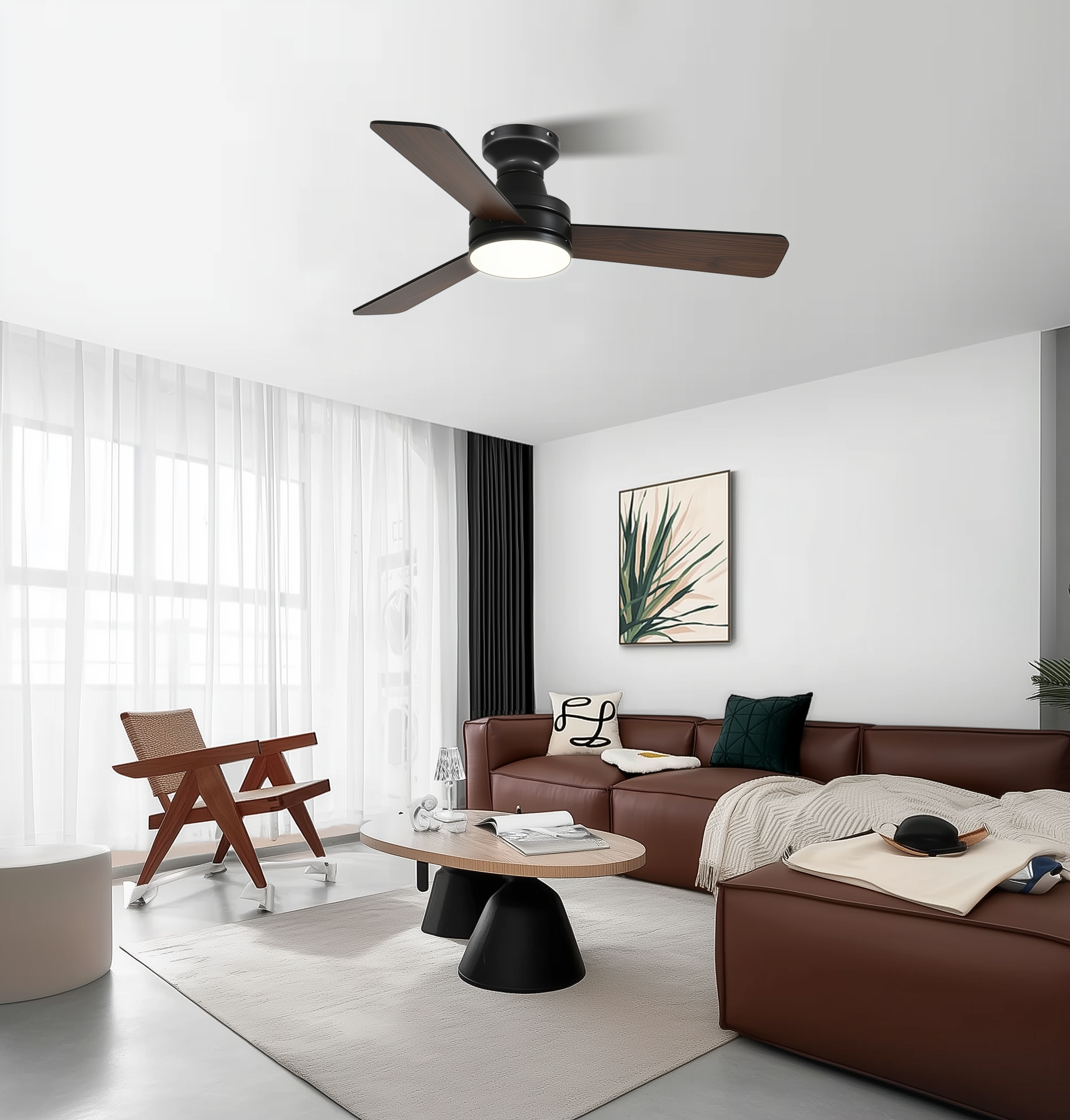
An inviting framework for a technical problem
There is a small, true pleasure in evening air that moves just so — enough to lift the humidity from your skin without stealing the hush of twilight. This piece offers a clear framework to reconcile airflow (CFM) and acoustic comfort (decibels) for residential outdoor patio ceiling fan installations, marrying romance with reason. If you’re considering a stylish fixture that must perform, begin by exploring a well-specified large ceiling fan with light to anchor your design and performance expectations. In a project I installed on a covered Atlanta patio, choosing the right motor type and downrod length made evenings noticeably cooler and the AC run less — a hands-on anchor for what follows.

The three pillars you must honor
Any sensible framework rests on three pillars: airflow needs, acoustic limits, and site context. Airflow is described in CFM and speaks to how much air the fan moves. Acoustic comfort is measured in decibels (dB) and describes perceived loudness. Site context includes mounting height, roof pitch, and exposure to weather — each affects how a fan performs and how you will hear it. Keep those pillars in view as you choose blade pitch, motor type, and wet-rated hardware.

The five-step installation framework
Follow these five steps like a map: assess, specify, source, install, and tune.
– Assess: Measure the patio footprint and note ceiling height and obstructions. Think of the space as a room with seasons — airflow needs will change from spring to sultry midsummer.
– Specify: Translate comfort into performance requirements. Prioritize a fan whose published CFM and manufacturer noise data match your comfort goals, and select a UL wet-rated or damp-rated model depending on exposure.
– Source: Favor DC motors for quiet, efficient variable-speed control when budget allows; AC motors are simpler and robust. Check blade pitch and balance quality — a well-balanced blade set and a pitch in the practical mid-range often deliver smoother airflow with less motor strain.
– Install: Use the correct downrod and ensure the mounting box supports the fan’s sweep and weight. Higher ceilings usually need longer downrods to achieve optimal airflow at seating height.
– Tune: Balance blades, verify stable RPM at desired speeds, and listen for resonant tones near the mounting canopy. Measure in real conditions — evening ambient noise and furniture placement change how the fan is perceived.
Key technical knobs (and how to set them)
Blade pitch, motor type, and mounting height are the principal controls you will turn. Blade pitch affects torque and the fan’s ability to move air; too steep and the motor struggles, too shallow and airflow drops. Motor choice (DC vs AC) governs efficiency and typical noise profiles: DC motors often offer smoother, quieter operation with finer speed steps. Mounting height dictates the effective airflow at seating level — generally, aim for blades to sit high enough to clear heads but low enough to sweep the occupied zone.
Common mistakes that quietly sabotage performance
Many homeowners err by focusing only on aesthetics — pretty blades do not guarantee proper CFM or a low dB footprint. They order the largest blade sweep without checking motor capacity, or they assume an indoor-rated fan will survive an open porch. Don’t assume bigger equals quieter — often the opposite. —
Avoid these pitfalls:
- Ignoring published performance curves and real-world reviews.
- Choosing the wrong rating (wet vs damp) for exposed locations.
- Skimping on proper downrod length or canopy reinforcement.
Controls, lighting, and extras: choosing features that matter
Integrated lighting can add warmth for dinners under the stars, but it also adds weight and wiring complexity — and the light fixture can change the fan’s balance. If you want illumination plus performance, review models that integrate both thoughtfully; many large ceiling fans with lighting are engineered to marry lamp kits with balanced blades and rated motors. Consider remote or smart controls for fine-grained speed and schedule control — they help you run the fan at the quietest effective setting when neighbors or late-night conversation matter.
On-site testing and measurement (practical checks)
Bring a simple checklist to the first run: confirm blade clearance, measure sound subjectively from seating positions, and test speeds. If you have access to an anemometer, take a few readings at seating height to compare to manufacturer CFM claims — remember that published CFM is measured under ideal conditions. Listen for tonal resonances at each speed: steady white-noise is often less intrusive than intermittent clicks or whines.
Alternatives and when to choose them
Sometimes multiple smaller fans outperform a single large unit for irregular patios or L-shaped porches; at other times, a single high-CFM, low-RPM large fan creates a gentle, room-scale breeze with fewer visual interruptions. Choose multiple fans when you need targeted coverage around several seating groups. Choose a single large, low-noise fan when you want an elegant, uniform motion across an open, rectangular footprint.
Three golden rules for selections and trade-offs
1) Match performance to place: prioritize published CFM and real-world reviews for open patios, and prefer damp/wet ratings for exposed installations. 2) Favor balanced design over sheer sweep: a mid-pitch blade set on a capable motor often yields quieter, more reliable airflow than oversized blades on a weak motor. 3) Test before you trust: perform an on-site speed and sound check during the conditions you care about — evening breeze, full seating, nearby neighbors.
Final advisory and where Orison fits
When you marry quiet with circulation, you gain evenings that feel still and alive at once — cool air that does not shout. Apply those three golden rules as your compass and you will select hardware that delivers comfort without compromise. For thoughtfully engineered options that pull these threads together, Orison often provides models and guidance that simplify the leap from aspiration to installation. —

