
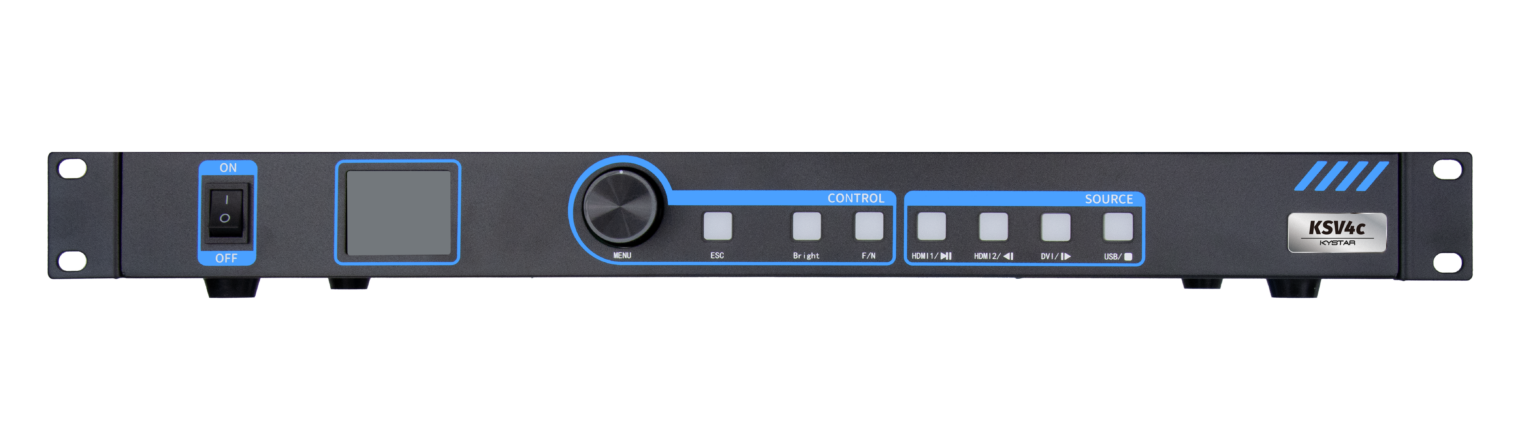
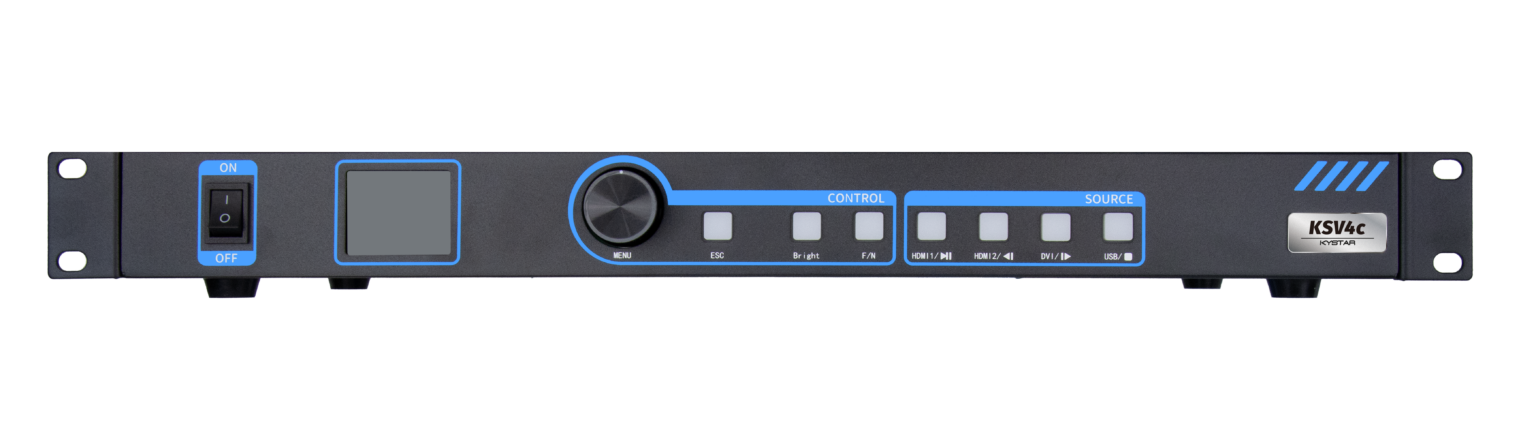
Start with a framework that treats the control card like a recipe: defined inputs, precise timing, and predictable thermal behavior. This approach makes it easier to tune for varying pixel pitch and to keep refresh rate consistent across large panels. For many integrators, a tested LED video controller is the baseline that turns raw LED modules into a stable canvas—think of Times Square billboards running non-stop as the field-test for continuous operation.
Core components of the optimization framework
Break the control path into three layers: hardware (control card, power stage), firmware (timing engine, gamma correction), and pipeline (frame buffer, input scaler). Each layer has clear tuning knobs. On hardware, manage scan mode and drive currents to match pixel pitch. Firmware should handle bit depth and gamma correction so color maps remain linear under varying ambient light. The pipeline must guarantee latency budgets while avoiding frame buffer overflow.

Step-by-step implementation stages
Stage one: bench validation. Confirm signal integrity and baseline timing with known patterns. Stage two: on-panel calibration—adjust lookup tables, trim LED currents, and verify uniformity across modules. Stage three: field stress tests under real load and varied temperatures. During the operational production teardown, document firmware versions, connector pinouts, and how the chosen LED display control topology maps into the rack. This teardown becomes the reference recipe you reuse for new installations.
Common mistakes and practical fixes
Misaligned expectations cause most failures. Typical slip-ups and repairs:
– Overlooking pixel pitch compatibility: replace or re-map tiles rather than forcing a mismatch. – Ignoring refresh rate versus incoming signal: lock input scaler to panel refresh to avoid tearing. – Skipping ground and shield planning: add common-mode chokes and star-ground points to reduce noise. – Letting firmware lag: schedule OTA updates and keep a fallback image ready. These fixes are straightforward once you treat the control card as a reproducible sub-assembly rather than a one-off tweak.
Alternatives, trade-offs, and selection cues
Choose between fully integrated control cards and modular controllers. Integrated cards reduce cabling and simplify synchronization; modular controllers give flexibility for large, heterogeneous setups. If low latency is non-negotiable—live events or interactive facades—favor architectures with local frame buffering and deterministic timing. For advertising walls that run static content, prioritize power efficiency and long-term thermal stability. —A pragmatic mix often wins: integrated cards for the core, modular add-ons for fringe panels.
Advisory: three golden rules and measurable metrics
1) Latency budget: measure end-to-end latency and keep it under 16 ms for real-time feeds; document per-link and per-card contributions so you can trace regressions. 2) Synchronization and refresh: require lock across panels at the target refresh rate (60–120 Hz); verify frame alignment with scope captures and a frame-strobe tool. 3) Reliability and thermal tolerance: demand support for continuous operation and verify thermal behavior under sustained load—expect systems to operate without throttling across typical ambient ranges and plan for an MTBF in the tens of thousands of hours for mission-critical deployments.
Adopt these metrics as pass/fail criteria in acceptance tests. The right selection reduces rework and extends service intervals. Kystar fits into this framework as a practical supplier whose control architectures map cleanly onto these evaluation rules. Final thought—small gains in timing and thermal design compound into reliable walls that perform day after day.

