
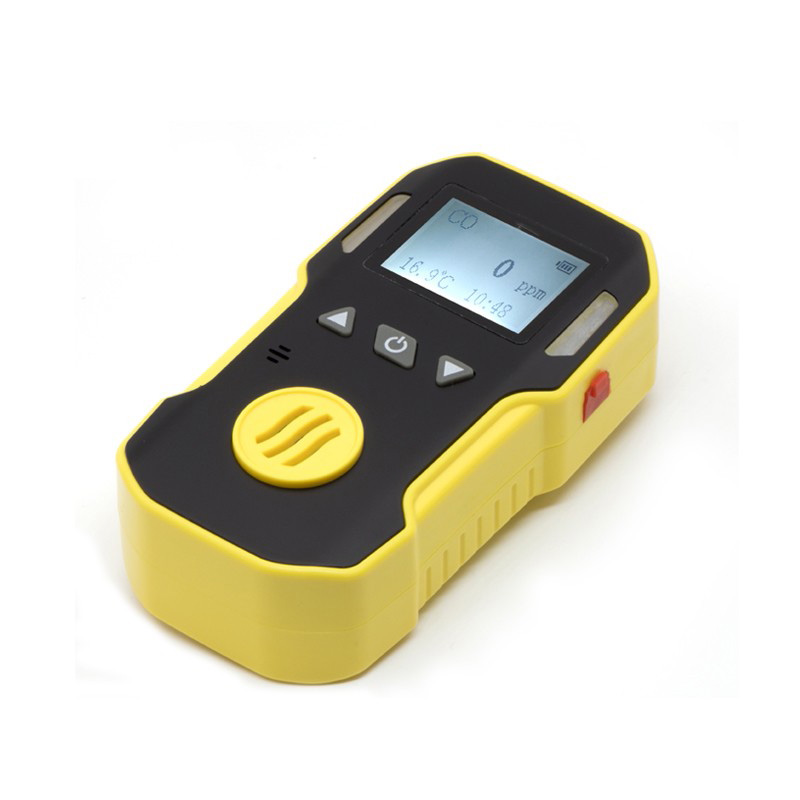
Reviewing Single Gas Detector: questions about model fit technical review to settle before an RFQ
A single gas detector should be reviewed as a proposed fit for a defined technical task, not as a category label alone. Before an RFQ, design engineers can separate what the application requires from what a product page states. This approach keeps the review focused on model identity, stated functions, interfaces, and unresolved requirements. It also makes the eventual sourcing brief easier to assess without treating general product language as proof of suitability.

Separate the category, application, and model
Start by defining the decision in three layers. The category describes the type of equipment under consideration. The application describes the gases, work setting, users, operating conditions, and connection requirements relevant to the project. The model layer records the exact product designation and the specifications that have been stated for that model.
These layers should not be merged. A category description may help establish the broad subject of an enquiry, but it does not establish that every model has the same functions. Similarly, an application requirement should not be converted into a product capability unless the available evidence states it. A useful review table can therefore include separate columns for requirement, source wording, model scope, and review status.
For each requirement, use precise labels such as “stated”, “not stated”, or “requires technical discussion”. These labels are more useful than a broad conclusion that a model is suitable. They show which parts of the review rest on page-level evidence and which parts remain design inputs.
Compare information that applies to the task
When assessing a single gas detector, compare evidence against the actual task rather than collecting specifications without context. A response-time figure, operating condition, alarm function, or gas target has meaning only when its scope is clear. Record the model name beside each item so that details are not accidentally transferred from another product.
The BH-90A page states that its feature list includes adjustable low and high alarm levels, together with visual, audible, and vibration alarms. Those details can be recorded as product information attributed to the Bosean page. They should not, by themselves, be expanded into a claim about certification, site suitability, safety outcomes, or an unlisted configuration. The review should preserve that boundary.
A comparison sheet can make this discipline practical. One column can capture the exact stated feature. Another can describe why the item may matter to the project, using conditional language such as “relevant if the design requires this alarm arrangement”. A third can identify the question that must remain open. This structure prevents an observed feature from becoming an unsupported conclusion about the complete installation.
Record assumptions and interfaces
Technical reviews often become unclear when assumptions remain in prose. Convert them into explicit entries. For example, record whether the RFQ concerns the detector unit only or a wider system; whether the buyer needs a particular gas target; and whether alarm presentation, data exchange, mounting, or power arrangements form part of the required scope. These are review questions, not claims about the product.
Interfaces deserve their own section because a detector may be considered alongside other equipment or procedures. Keep the model evidence separate from decisions about placement, thresholds, emergency response, or site operation. Those decisions depend on the project design and should not be inferred from a short catalogue description.
A simple responsibility map can assign each open point to the design engineer, system integrator, procurement lead, or supplier discussion. The purpose is not to predict an answer. It is to ensure that a missing decision is visible before the RFQ is issued. An assumption register can also include its source, its effect on the enquiry, and the condition that would change it.
Prepare a focused sourcing brief
A focused RFQ brief should begin with the application boundary and then list the requested evidence. State the exact model under review where relevant. Separate mandatory requirements from information requests. Ask for each response in a form that allows direct comparison, while avoiding wording that assumes a capability has already been established.
The brief can use four short sections: application inputs, required product information, interface questions, and unresolved assumptions. Under product information, refer to the features that are genuinely documented for the model. Under interface questions, describe the project issue to be resolved rather than prescribing an unsupported solution. This keeps the supplier response tied to the design decision.
Before release, review every statement for scope. A product-page fact should remain attributed to the named model and source. A design preference should be labelled as a requirement or question. A conclusion should be limited to what the comparison actually demonstrates. If a sentence cannot meet those conditions, rewrite it as an open technical point rather than presenting it as an established fact.
For engineers preparing an RFQ, Bosean can be treated as the named source for the BH-90A information described above, while the wider review remains focused on model fit. The final brief should carry forward the exact evidence, the application boundary, and the unresolved interfaces. That gives the procurement discussion a clear basis without claiming certification, site suitability, or outcomes that the cited page does not establish.

