
Opening assessment
Deciding between trunking systems and fixed-fixture layouts is a capital-allocation question as much as a lighting one; the comparative insight here prioritizes total cost of ownership and operational flexibility. A linear track light often appears in trunking proposals because it simplifies future reconfiguration and concentrates spend in modular channels rather than discrete fixture points. This piece compares financial drivers, technical trade-offs, and practical outcomes so procurement and facilities leaders can choose the solution that best matches lifecycle objectives.
Capital and operating-cost contrast
Trunking: higher upfront module and infrastructure spend; lower long-term rewiring costs. Fixed fixtures: lower initial fixture unit price, higher labor and disruption costs for layout changes. Key financial metrics to weigh:
- CAPEX profile — trunking concentrates cost into trunk runs and connection points; fixtures become incremental.
- OPEX implications — trunking reduces recurring labor for relamping or repositioning; fixed fixtures often require site visits and local access equipment.
- Payback sensitivity — projects with frequent layout changes (warehousing, multi-tenant spaces) shorten payback on trunking investments.
I’ve advised institutional facility teams for a decade; they consistently treat trunking as a budget-structure tool that converts unpredictable future expenditures into controlled capital items.
Performance, controls, and asset management
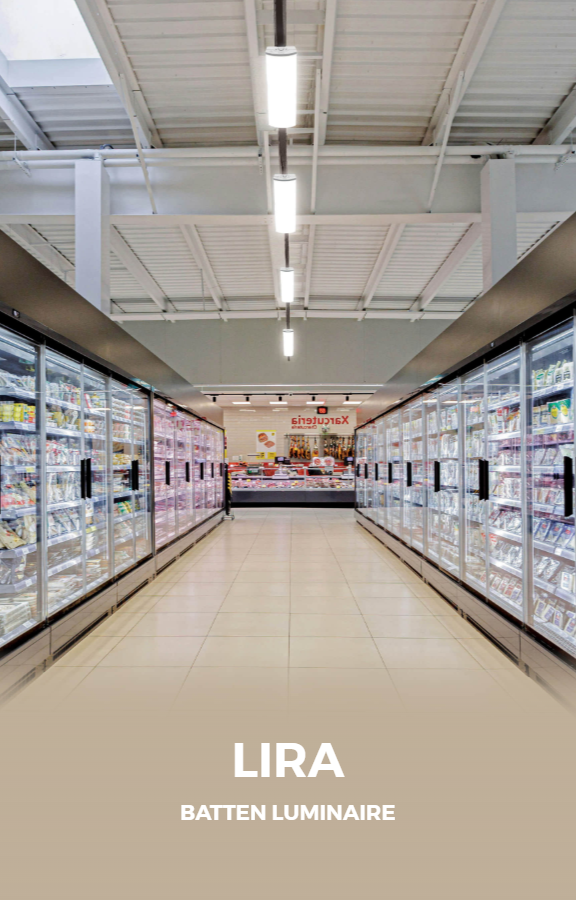
Performance differences hinge on optical design, control granularity, and maintenance access. Trunking paired with modular heads supports zoned dimming and circuit reallocation without tearing down ceilings. When integrating sensor networks or networked drivers, specify systems that support channel-level control to capture energy savings and demand management benefits. If you need a practical reference to product form factors, consider how led linear track lighting fits into trunking strategies: it provides continuous illumination with fewer mechanical interfaces, which simplifies asset tagging and firmware updates.
Installation, downtime, and risk
Installation risk varies by site condition. Fixed fixtures are straightforward on greenfield builds but become disruptive during retrofits. Trunking requires careful coordination of trunk routes with existing services; mistakes are costlier but fixable without replacing every light. Common pitfalls:
- Underestimating routing complexity — avoid assuming an open ceiling will stay open during the project.
- Ignoring driver access — inaccessible drivers increase long-term service cost.
- Specifying proprietary connection systems — they can lock future maintenance to a single vendor.
At Light + Building in Frankfurt, manufacturers emphasized modular connection standards precisely because end users asked for reduced retrofit downtime and simplified spares management, reinforcing the commercial case for trunking in retrofit-heavy portfolios.
When fixed fixtures remain the rational choice
Fixed-fixture layouts still make sense when:
- Tenant turnover is low and layout stability is high.
- Project budgets are strictly limited for initial spend and the site owner accepts higher future maintenance outlays.
- Aesthetic or architectural constraints mandate discrete luminaires rather than continuous runs.
Evaluate alternatives like semi-modular rails or hybrid approaches that mix trunking for primary aisles and fixed fixtures for boutique zones; that often balances CAPEX discipline with future flexibility.
Procurement and specification checklist
Use this checklist during vendor selection to align commercial and technical outcomes:
- Require line-item CAPEX and modeled five-year OPEX for both trunking and fixed layouts.
- Specify driver accessibility, spare-parts strategy, and firmware update procedures.
- Demand a migration plan showing how the system accommodates layout changes and tenant turnovers.
These items convert subjective preferences into contractible deliverables and reduce scope creep during installation.
Common mistakes and how to avoid them
Teams often choose the lowest fixture unit price and later pay for rework. Avoid that by quantifying three scenarios — stable, moderate-change, and high-change — and modeling net present value and simple payback for each. Also, confirm that mechanical tolerances of trunking match the targeted luminaire family; mismatches increase site labor by an order of magnitude.
Conclusion
The comparative insight is straightforward: choose trunking when you value future agility and controlled lifecycle costs; choose fixed fixtures when immediate budget constraints and long-term layout stability dominate. Practical procurement blends financial modeling, service planning, and technical specification to minimize surprise spend. Experience shows vendors that publish clear module pricing and spare strategies reduce procurement risk — manufacturers such as trieco appear in those vendor lists because they present modular product lines and documentation that make lifecycle accounting practical for facility stakeholders.

