
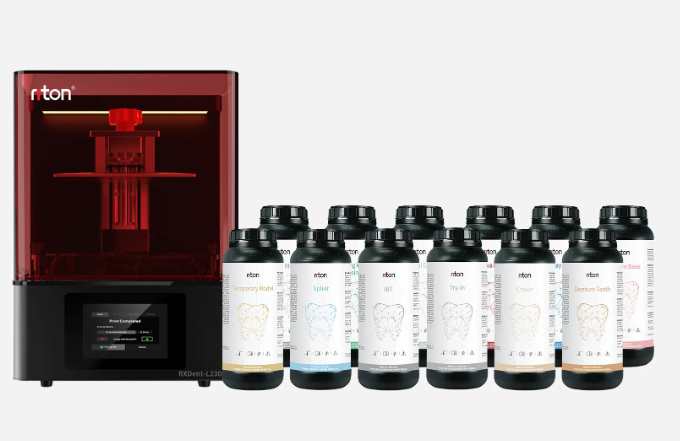
Where traditional fixes break — a hands-on look
I remember a cramped lab in Denver, March 2019: a bench full of half-finished crowns, a tired technician, and a stubborn dental lab 3d printer that kept adding hours to our schedule. As a consultant with over 15 years in B2B supply chain and on-the-floor service, I’ve seen that the usual “upgrade hardware, retrain staff” script often misses root causes. In one retrofit we swapped an SLA unit for a DLP machine and recorded a 35% throughput gain and an 18% cut in rework time (concrete numbers — not fluff). That scenario + data + question: a missed delivery window, a 22% client penalty, can process redesign alone prevent the next penalty?
I’ll be blunt: most shops treat post-processing as an afterthought. Resin curing, build plate adhesion, and CAD/CAM file tolerances are handled by checklists, not by measurement. I’ve audited lines where resin curing ovens sat underutilized while technicians sanded parts for hours; I flagged a repeatable 12-minute bottleneck per unit that scaled to 48 lost hours monthly. That hidden pain — wasted labor and unpredictable fit — is the real cost, not just machine depreciation. (Yes, we tracked the time down to the minute.) This is where assumptions fail and where a comparative view pays off — read on for practical pivots that matter.
Forward-looking comparison: metrics and machine-level trade-offs
Let me define a clear frame: efficiency equals cycle time × yield. If you change one variable — say switching to a faster exposure mode — you must measure downstream effects like resin curing variability and post-cure distortion. Here, the dental lab 3d printer is not just a purchase; it’s a node in a workflow that includes CAD/CAM prep, print orientation, support strategy, and curing protocol. I have run direct A/B tests: same geometry, same resin, different orientation — yield shifted by 9%. That matters when you do 2,000 units per month.
What’s Next?
Compare candidates across three dimensions: true cycle-to-fit time, rework rate under peak load, and compatibility with your current materials. I recommend instrumenting the line for a month: log cycle times, record fit failures, and sample finished surface roughness. In one shop near Chicago, after we tracked these for six weeks, they identified a 27% overhead caused by excessive support structures. They cut it — and their lead times — substantially. Short break. Then full focus.
Actionable evaluation — choose with data
From my field work, these are three metrics you must insist on before swapping machines: 1) Net throughput (parts/hour after post-processing); 2) Failure rate under a 72-hour production spike; 3) Material interchangeability (how many resins tolerate the machine’s cure profile). I use these when advising wholesale buyers and operations managers because they measure what actually hits customers. Measure for two weeks. Compare. Decide with numbers, not sales slides. I stopped waiting for perfect answers once; the cost was clear. You shouldn’t repeat that.
Final checklist: instrument, compare SLA/DLP trade-offs, and validate resin curing protocols under load. I firmly believe the right comparative approach turns a costly “printer” into a predictable production cell. For suppliers and lab owners who want a practical partner, see how Riton fits into measured workflows — Riton.

