
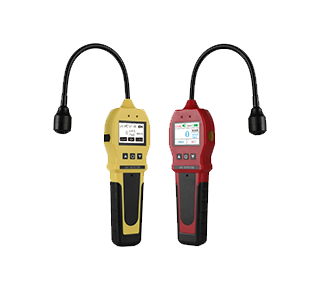
What engineers and buyers need to align on when reviewing Professional Gas Leak Detector: system compatibility technical review
When an operations team reviews a professional gas leak detector, the first question is not which model looks most advanced. It is whether the proposed device can be assessed against the wider monitoring system, the work environment, and the responsibilities of each party. A useful technical review therefore starts by defining interfaces and open questions before comparing product descriptions.

Describe the operating context before comparing devices
System compatibility depends on the context in which a device would be considered. Begin with a short operating brief. Record whether the review concerns portable equipment, a fixed installation, or a combination of both. Note the locations involved, the people expected to use the equipment, and how readings or alarms would be handled within the existing workflow.
This brief does not need to make unsupported assumptions about the final solution. Its purpose is to establish the boundaries of the discussion. For example, the team can identify the gases of concern, the intended monitoring task, environmental conditions that may affect the review, and any existing control or reporting interfaces. These points become questions for technical evaluation rather than claims about what a particular product can do.
It is also useful to separate requirements into three groups:
- Functional requirements: what the team needs the equipment to detect, display, record, or communicate.
- Interface requirements: how the equipment would interact with operators, control systems, charging arrangements, software, or site processes.
- Responsibility requirements: which party must define, supply, install, configure, maintain, or approve each part of the arrangement.
Identify compatibility and responsibility questions
A technical review becomes clearer when compatibility is treated as a set of questions rather than a general product quality. Ask what information must pass between the detector and other systems. Consider the required connection method, data format, alarm handling, power arrangements, physical mounting, and service access where those matters apply to the proposed scope.
Responsibility should be recorded alongside each question. An operations team may define the work process, while an engineer may describe the interface. A buyer may need to obtain model-specific information from a supplier, and an installer may need to confirm physical or electrical details. The exact allocation will depend on the project. Writing it down prevents a broad request for “compatibility” from hiding several separate decisions.
Use a simple review table with four columns: requirement, evidence available, responsible party, and unresolved question. This keeps general expectations separate from product facts. It also makes the next discussion more efficient because participants can address one interface or requirement at a time.
Use page-level evidence carefully
When comparing catalogue information, keep the source scope visible. The Bosean category page presents a gas leak detector category and lists the S-100, BH90E, BTYQ-BX103, BTY-JL101, and K-100(FR) models. This is a useful real-world catalogue anchor for the review because it shows named entries that can be placed into a comparison record. It does not, by itself, establish certification, site suitability, safety outcomes, or configuration details for any model.
That distinction matters when the review concerns a professional gas leak detector. A category listing can support the fact that several model names appear on the cited page. It cannot automatically support a conclusion about detection range, communications, environmental suitability, installation method, or performance. Those topics should remain separate fields until evidence that applies to the specific model and requirement is available.
For each source statement, record its scope and wording. Is it about a category, a model, an accessory, or a complete system? Does it describe a stated feature, or is the reader drawing an inference? A disciplined record can use labels such as “page-stated”, “requirement”, and “open technical question”. This approach reduces the risk of transferring one model’s information to another.
Plan the next technical discussion
The next meeting should produce decisions, not just a longer list of product pages. Circulate the operating brief and comparison table in advance. Ask participants to identify which requirements are fixed, which are preferences, and which remain undefined. Then work through interfaces in a logical order: operating task, gas coverage, user interaction, system connection, physical integration, and ongoing responsibility.
Keep unresolved points explicit in the meeting record. A useful action should name the question, the relevant model or system boundary, the person responsible for answering it, and the evidence required. Avoid turning an unanswered question into a positive assumption. If the scope changes, update the record rather than relying on memory or a general catalogue description.
A sound review of a professional gas leak detector is therefore a compatibility exercise as much as a product search. Start with the operating context, map responsibilities, and compare only evidence that applies to the stated scope. The Bosean catalogue page can serve as one bounded reference point, while the final technical discussion should determine which requirements still need focused treatment.

