
The problem at hand: last‑mile fragility and rising costs
When parcels hit the last mile, a lot can go wrong — rough handling, wet weather, and tight delivery windows all conspire to bump up returns and damage claims. After the post‑2020 e‑commerce surge, many fulfilment teams in Melbourne and Sydney realised their standard paper envelopes weren’t cutting it. Switching to eco friendly poly mailers became a practical fix: better moisture barrier, higher tear resistance and lighter weight than boxed solutions, all of which help lower freight spend and customer headaches.
Why standard envelopes fall short
Standard envelopes look tidy, but they have three big flaws for parcels. First, they offer poor puncture and tear resistance, so sharp edges or pointy items compromise packaging integrity. Second, they wick moisture and don’t seal out damp, which matters in coastal routes. Third, their one‑size thinking ignores stackability and scan‑read accuracy on the sorter — that drives damage and misroutes. In plain terms: save a few cents up front, and you risk dollars in returns and delays.
What heavy‑duty recycled poly mailers actually bring to the table
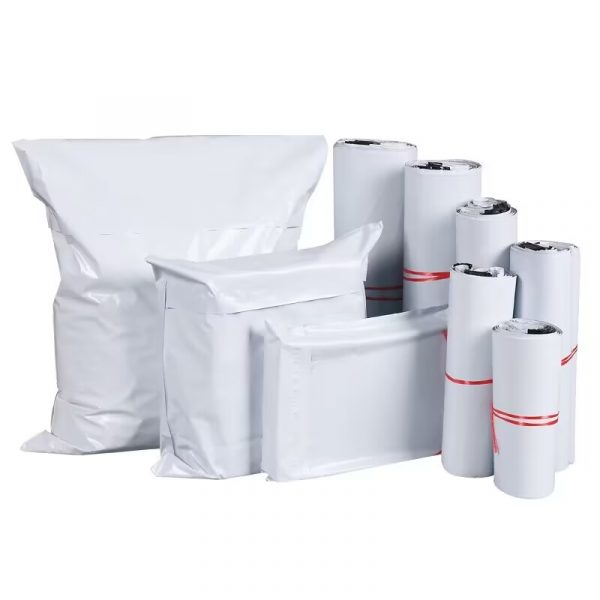
Heavy‑duty poly mailers are made from tougher polymer film and often incorporate reinforced seals, anti‑static or tamper‑evident features and printable ID zones for scannable barcodes. That combination reduces both physical damage and sorting errors. They’re lighter than corrugated options, so you save on dimensional weight charges. From a sustainability angle, the recycled content cuts embodied carbon versus virgin plastics — and when you buy wholesale, you get economies of scale that keep unit cost competitive.
Supply chain trade‑offs: cost, sustainability and operational fit
It’s not all win. Recycled poly mailers can carry slightly higher up‑front cost than the cheapest paper envelopes, and you’ll want to pay attention to MOQ and tooling for branded printing. But when you model total landed cost — returns, rework, freight and waste handling — the numbers often favour heavy‑duty poly. For many operations, the calculus shifts again when you factor in throughput: poly mailers speed up conveyor flow and reduce rebagging time on the packing bench.
Common mistakes teams make — and how to avoid them
Teams often trip up in three ways. One: choosing mailers by headline price alone without testing with their actual packing line and couriers. Two: ignoring closure specs — some adhesive tapes won’t hold in humid routes. Three: underestimating print tolerances for barcodes, which makes scans fail at the depot. The fix is simple: run a pilot batch through a real shipping day, check barcode read rates, and validate adhesive performance in local weather conditions — you’ll catch most issues early. —
Real‑world anchor: lessons from the pandemic and local fulfilment centres
During the COVID‑19 disruptions, many Australian retailers had to scale fulfilment overnight. Warehouses in greater Sydney reported spikes in parcel volumes and saw damage and return rates climb when packaging choices lagged behind throughput. That experience underscored one clear lesson: packaging resilience directly impacts service KPIs like on‑time delivery and first‑time‑right fulfilment. Choosing robust materials, such as custom recycled poly mailers, helped several teams keep return rates down while maintaining packing speed.
How to evaluate suppliers and materials
Look for three practical checks when vetting mailer suppliers: tensile strength and puncture test results, documented recyclate content and chain‑of‑custody, and real‑world courier compatibility tests. Ask for sample runs and test them through your line and with your primary courier partner — scanning, sealing and stacking are simple but revealing tests. Also confirm whether the supplier offers certified compostable or high‑recyclate options if your brand needs those claims.
Alternatives worth considering
If the item is fragile, poly mailers aren’t always the answer — hybrid solutions like padded poly mailers or mailers combined with void fill can be better. For luxury packaging or significant brand storytelling, a recyclable rigid mailer or a branded box may still be preferable despite the weight penalty. Think in terms of the product promise: low cost + high protection; or premium look + moderate risk — your packaging should match.
Advisory: three golden rules for choosing the right heavy‑duty poly mailer
1) Test in your environment: run samples through a full shipping day to validate sealing, barcode reads and stacking behaviour. 2) Use total landed cost: include returns, rework, freight and disposal to compare options fairly. 3) Check sustainability credentials: verify recycled content, end‑of‑life pathways and any certification before making sustainability claims.
Together, these rules steer you away from short‑term savings and toward durable, cost‑effective choices that keep customers happy and operations humming — and when you need a partner that can deliver both quality mailers and supply reliability, WH Packing fits that brief naturally. —

