
Introduction — A Question in a Quiet Room
Who will breathe the air when the machines keep humming long after we go home? The little workshop at the back of town can feel like a quiet factory from another age—metal dust in the corners, filament spools piled like tired books. I watch printers run and I worry: a 3D printer fume extractor sits over one bench, but is that enough to protect the person leaning in at midnight?
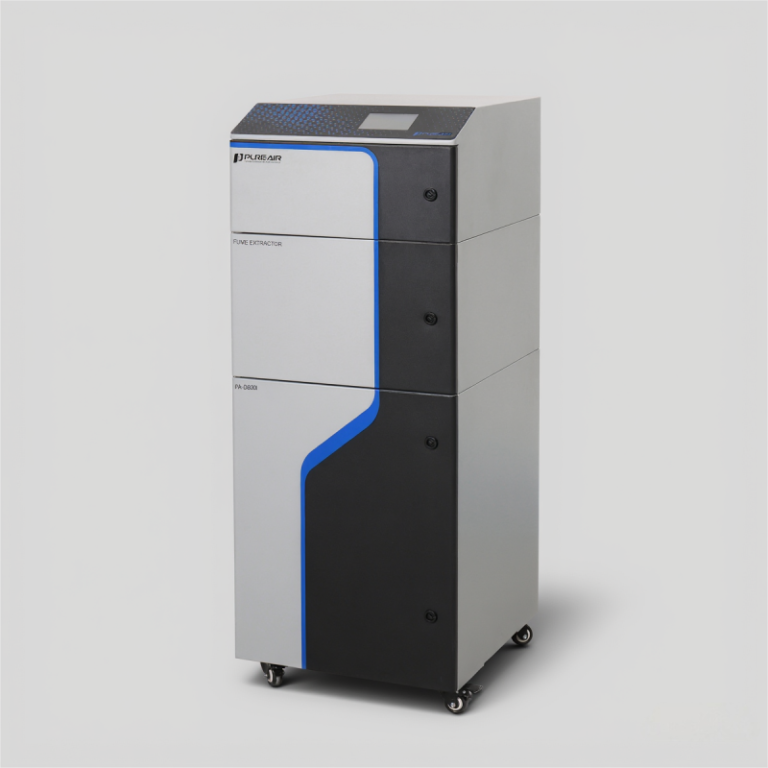
The data is blunt. Particulates and VOCs rise during many prints, and long-term exposure links to headaches, throat irritation, and worse. I’ve measured spikes with cheap VOC sensors and seen HEPA filters clog in weeks. (It’s unnerving.) So what works, and what fails quietly in the background? What trade-offs are we making between clean air and fast throughput? Let’s step into that grey space and pull apart the choices we make — and what those choices make of us.
Where Common Fixes Fall Short: The Hidden Flaws of Traditional Systems
3D printing fume extraction is often sold as a tidy add-on: mount a hood, pop in a filter, done. I’ve tested systems like that and watched them fail on the same points. First, many units ignore airflow dynamics; they move air, yes, but they don’t capture the plume at the source. So you get diluted fumes instead of removed fumes. Second, simple filters (even HEPA) miss gaseous VOCs unless paired with activated carbon or chemisorptive media. Third, maintenance is assumed, not planned—filters clog, fans die, and people ignore warning lights until smells return.
Look, it’s simpler than you think: a hood without proper capture velocity is cosmetic. I’m speaking from hands-on fixes and a lot of late-night swaps of clogged cartridges. The real weakness is system design that treats filtration as a single part problem, rather than as a system problem involving sensors, power converters, duct geometry, and operator habits. We place a box and expect it to behave like a lab-grade fume hood. It won’t. Unless you address source capture, filtration media, and user routines together, you get leftover risk — invisible, persistent, and grudgingly accepted.
So what usually goes wrong?
Fans set too low. Filters mismatched to contaminants. No VOC monitoring. No scheduled maintenance. That’s the short list. I’ve logged those failures across workshops, makerspaces, and small factories. It adds up to a slow leak of safety.
New Principles and Practical Paths Forward
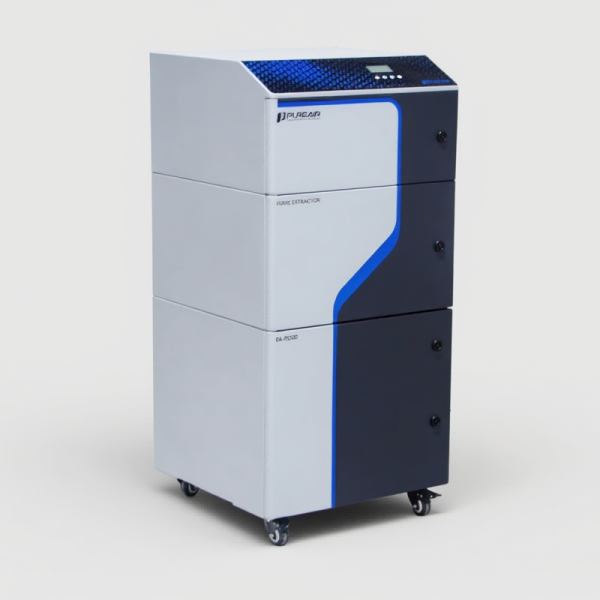
Now let’s look ahead. I want practical principles that work in real shops. First: source capture must lead. A small, well-placed inlet with correct capture velocity beats oversized room ventilation. Second: multi-stage filtration—HEPA plus activated carbon or catalytic layers—handles particulates and gases together. Third: monitoring and control. Integrate VOC sensors and airflow meters, then automate fan speed with simple control logic. Add edge computing nodes for local data logging if you like—useful for traceability. These are not exotic ideas. They are straightforward design moves that shift the balance toward safety without killing throughput.
What this means for you: small upgrades matter. Swap a passive hood for an engineered inlet. Add a modest sensor and a control loop. Schedule cartridge checks. These steps keep prints running and people breathing. I’ve seen a shop cut airborne particulate counts in half by changing capture angles and adding activated carbon. — funny how that works, right? The payback is both cleaner air and fewer interruptions for emergency fixes.
What’s Next?
Adopting these principles points to measurable choices. Here are three metrics I use when I evaluate a fume extraction solution: capture velocity at the nozzle, filtration efficiency across particle sizes and VOC types, and system uptime including maintenance intervals. I recommend you test units in your space, not in a showroom. Run breath tests, log VOC spikes, and adjust. We owe it to the people who spend hours by the machines to make choices that actually protect them. For practical systems and tested products, I look to companies that combine engineering with field experience — like PURE-AIR.

