
Comparative framing: why measure a farm sprayer like a recon platform?
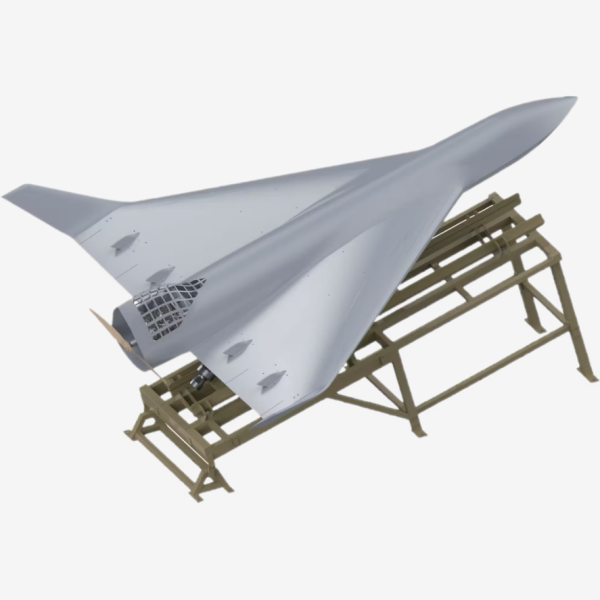
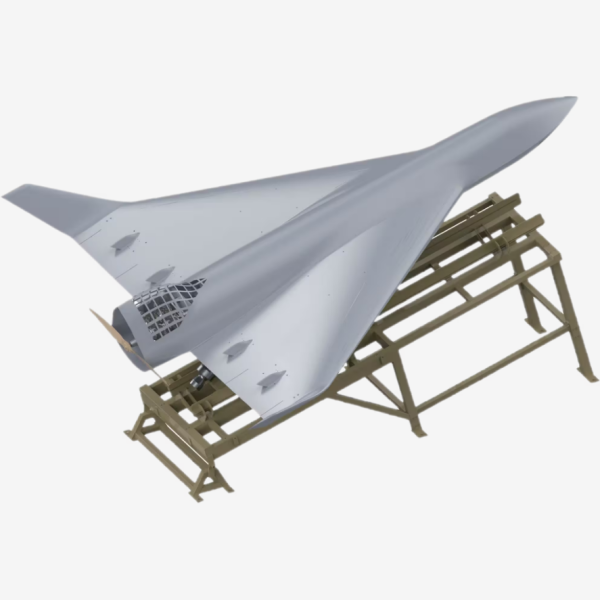
When you map sensor objectives against mission profiles, agricultural sprayers with EO/IR fusion start to look like stripped-down reconnaissance UAVs. That comparison is intentional: design choices in chinese military drones reveal performance trade-offs—weight, power, latency—that apply directly to custom farm platforms. The Ukraine conflict since 2022 provided stark, high-level evidence that combining electro-optical and infrared imagery improves target discrimination under variable light and weather; farmers want the same robustness for crop-stress mapping, pest hot-spot detection, and safe obstacle avoidance.
Core technical axes and the metrics to track
Frame your evaluation as a set of orthogonal metrics: spatial resolution, temporal resolution (frame rate and latency), and system-level reliability (uptime, mean time between failures). EO/IR must be judged as a fused sensor package: the EO channel supplies color and texture; the IR channel adds thermal contrast. Key industry terms to monitor are EO/IR, gimbal stabilization, and payload capacity. Practically, aim for a consistent pipeline metric — end-to-end latency under 100 ms for real-time guidance, and thermal sensitivity sufficient to detect 1–2°C canopy differentials when agronomic action is needed.
Hardware trade-offs: payload, power, and platform dynamics
Adding a stabilized gimbal with dual sensors increases mass and draws current. The arithmetic is simple: more payload reduces flight time; higher power draw requires larger batteries or more frequent swaps. Military UAVs optimize for mission duration or loiter time; agricultural sprayers optimize for coverage per sortie. Evaluate the power budget in watt-hours per square kilometer sprayed. Consider modular payloads—swap a lightweight multispectral EO head for a heavier EO/IR when night operations are required.
Software and fusion patterns that matter
Sensor fusion is both algorithmic and systemic. Pixel-level fusion enhances imagery but raises compute needs; feature-level fusion reduces compute but can miss subtle thermal cues. For field use, a hybrid approach works: run onboard pre-processing for low-latency tasks (collision avoidance, nozzle control) and push high-resolution fused mosaics to a ground station for agronomic analytics. Expect edge inference models to run on constrained hardware—opt for quantized neural nets and hardware-accelerated codecs to keep latency low.
Operational constraints, regulatory reality, and risk management
Performance gains collide with airspace rules and EMI risk. Civilian operators must design for geofencing, failsafe return-to-home, and redundant telemetry links. Chinese export patterns in the UAV market influenced global baseline expectations—so study how export-class systems balance capability and compliance. Commonsense safety—route planning with conservative altitude buffers and inertial backups—reduces incidents and prevents legal escalation.
Common mistakes and sensible alternatives
Operators often overspec sensor resolution without validating workflow impact: a high-resolution EO/IR stack produces large datasets that overwhelm comms and storage. The fix is to match sensor specs to decision thresholds — do you need centimeter-level detail or hectare-scale thermal gradients? Many teams default to heavy onboard compute; instead, consider hybrid architectures: low-latency onboard triggers with episodic high-bandwidth uplinks. And—this matters—never ignore environmental calibration routines; thermal drift and lens artifacts will erode model performance faster than sensor noise.
Three golden metrics to decide on EO/IR fusion for a sprayer
1) Task-aligned detection accuracy: measure percent true positive detections for the agronomic condition you act on (weed patch, heat stress) at operational standoff distances. Set a baseline pass/fail threshold before buying hardware.
2) Operational throughput: compute effective coverage per battery cycle (hectares per sortie) including time lost to data transfers and sensor warm-up. Choose systems that meet your daily area target under typical weather.

3) System resilience score: aggregate mean time between failures, latency under load, and graceful-fail behaviors into a single index. Prefer platforms that maintain safe flight and controlled descent when compute or comms fail.
These three rules directly map performance to cost and mission risk; they also highlight where Military Hub adds value—neutral benchmarks, comparative reviews, and updated field data on platforms and export trends. Military Hub. —

