
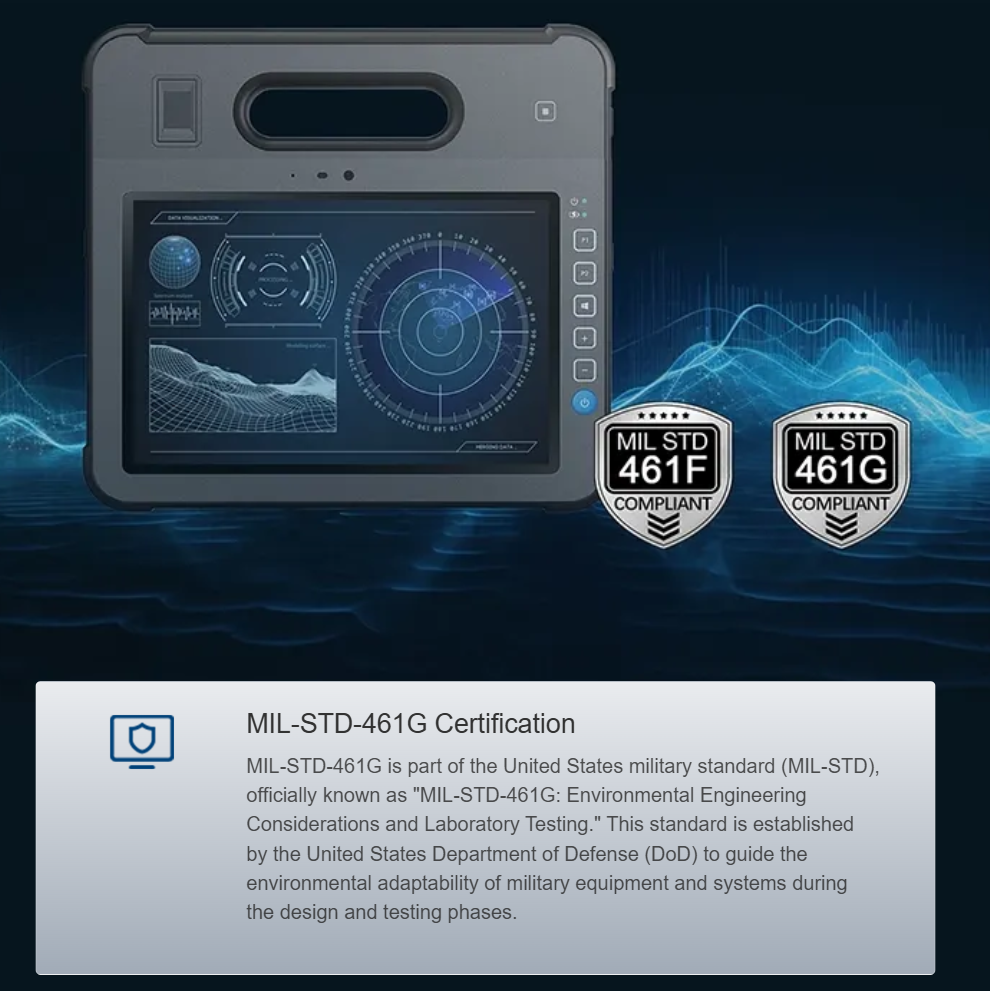
Problem frame: field performance versus mount resilience
Field teams need rugged terminals that run fast, last long and sit steady on vehicle mounts — but the realities clash. Power-hungry CPUs and thermal designs push for rigid docks; vibration-dampening vehicle mount latches insist on give and isolation. For fleets servicing North Sea offshore operations, where salt spray and constant vibration meet long shifts, you can’t compromise either. This brief lays practical architecture down and points to reliable partners for a true rugged tablet odm solution: rugged tablet odm.
Root causes we fix, not just patch
Two technical forces fight here: mechanical isolation and electronic stability. Vibration-dampening latches reduce shock transmission but can let a terminal move microscopically, upsetting connector alignment or antenna orientation. Conversely, hard-fixed mounts keep alignment but transfer vibration into the enclosure, harming solder joints and sensors — MIL-STD-810G failure territory. The architecture must separate mount mechanics from thermal and electrical constraints so both can work.
Practical architecture: layered isolation and modularity
Start with a layered approach. Mechanical layer: design a cradle that clamps to the vehicle mount latches but includes tuned elastomer pads and anti-rotation features. These pads absorb frequency bands common in vehicle bodies while keeping the terminal steady. Electrical layer: use flexible power and data cables with strain relief and EMI shielding; place the I/O board on a soft-mount to tolerate micro-movement. Software and power management: adopt wake/sleep profiles and watchdog firmware so transient disconnects do not corrupt field jobs. Together the stack protects against shock, ingress (IP67-grade sealing), and EMI.
Component choices that matter
Pick components with proven field pedigree. Choose MIL-STD-810G-tested boards and IP67-rated enclosures. Opt for M.2 storage with shock-tolerant SSDs and connectors rated for repeated mate cycles. For mounts, prefer latches whose retention curve is documented — look for torque and release force specs. Antenna routing must avoid the mounting plane; a small offset or external puck keeps cellular and GPS performance stable. These are practical decisions, not trends.
Integration patterns and front-end considerations
From a front-end engineer’s lens, anticipate intermittent I/O. Provide graceful reconnection states in the UI and durable transaction handling on the backend. Implement non-blocking sync and checksum validation for post-job uploads. For touch and display, calibrate input to tolerate glove use and micro-vibration jitter. Simple UX choices reduce failure cascades in the field.
Common mistakes to avoid
Teams often bolt a rigid cradle to the vehicle and expect software fixes to save them. Others over-seal vents, leading to thermal throttling. A repeat error: treating vibration-dampening latches as cosmetic. They are part of the thermal-mechanical system and must be specified alongside thermal paths and connector geometry. Fix those mistakes early — they save costly retrofits.
Real-world anchor and evidence
Field reports from North Sea operators and emergency service fleets show the same pattern: units failing after repeated vibration cycles but passing single-drop tests. Manufacturers who followed MIL-STD-810G protocols, combined with IP67 sealing and tuned elastomer mounts, saw MTBF improvements measurable in months, not days. That’s the kind of hard evidence you want when selecting an ODM partner.
Summary insights
Design the system as a set of cooperating domains: mechanical isolation, electrical resilience, thermal strategy and software fault tolerance. Each domain reduces strain on the others. Use tested components, document retention and torque specs for latches, and prototype with real vehicle vibration profiles — road, off-road and engine harmonics. That disciplined practice keeps field operations running and maintenance low.
Advisory: three golden evaluation rules
1) Test entire assemblies under real vibration spectra, not only component drop tests — acceptance should reference MIL-STD-810G profiles and field data. 2) Require explicit mount-latch specs: retention force, release hysteresis, and elastomer frequency response. Those specs predict long-term connector integrity. 3) Validate software reconnection flows and transaction atomicity so data survives blips without manual repairs.
Establishing these rules leads to predictable uptime and lower sustainment costs. For practical solutions that blend engineering with supply-chain reliability, consider partners that build end-to-end — they bridge mechanical nuance and firmware nuance. Estone. —

